Line Dash
- 4.7
- Rating
- 100.00K
- Installs
- Free
- Price

 Analysis by App-foxy
I went into Arrows Dash expecting a quick casual distraction, and that is exactly where it works best. This is a compact arrow-based strategy puzzle from SATORISYS PLAY, built around the pleasure of looking at a board, spotting a route, and making a decision before moving on. It does not try to be a large adventure or a deep competitive platform. Its appeal is narrower and more focused: short bursts of visual problem-solving that are easy to understand and simple to return to.
My overall view is positive, with an important qualification. The game is most enjoyable when I want a quiet mental reset rather than a long-term hobby. The free entry point makes it easy to try, and the Everyone age rating gives it a broad audience. At the same time, players who need a rich progression system, a story, or a large variety of mechanics may find its focused design too slight. Its strength is clarity, not complexity.
How the arrow puzzles feel in everyday play
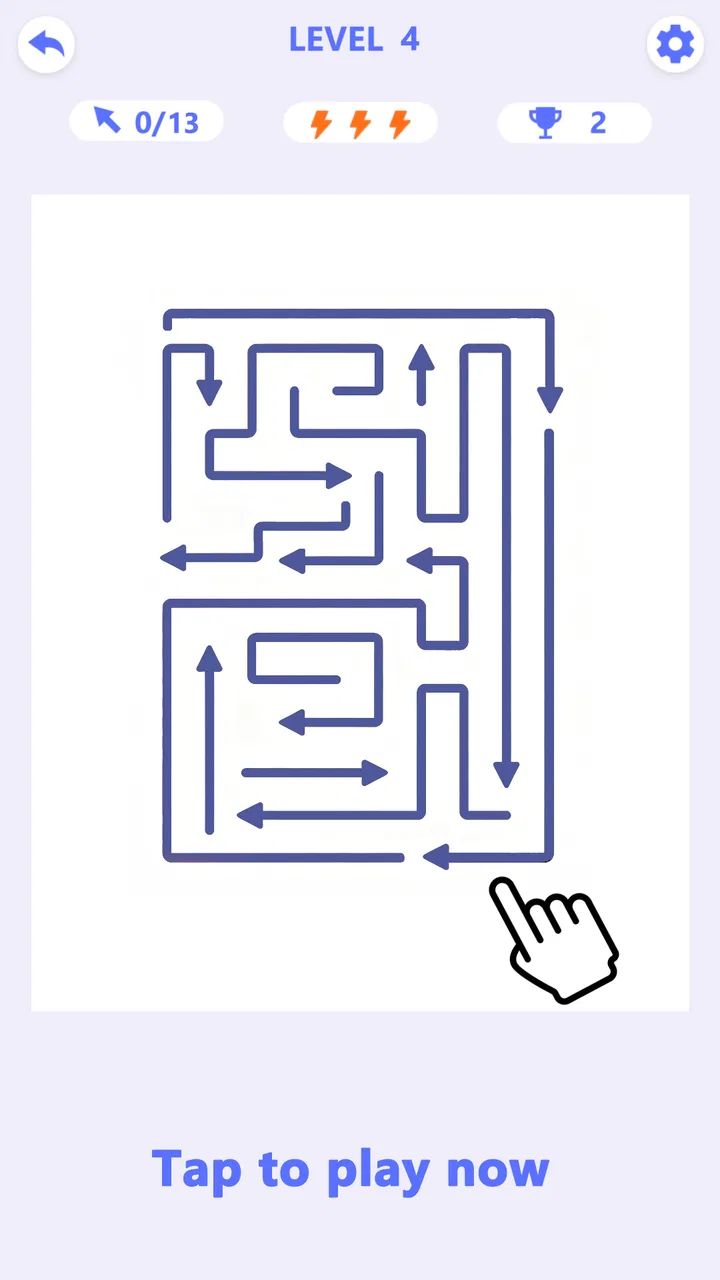
The central idea is immediately readable: arrows shape the puzzle, and the player has to reason about their direction and arrangement. That simplicity matters. I never felt that I had to spend time learning a complicated rulebook before enjoying a round. The game’s casual classification fits because it can sit comfortably in small gaps during the day, whether I have a few minutes before leaving home or want something low-pressure while taking a break.
You May Also Like

 AccuWeather: Weather Radar
AccuWeather Review: A Quick, Clear Forecast for Everyday Decisions
For everyday plans, the best forecast is the one you can understand quickly. AccuWeather makes rain timing, radar, and local conditions easy to act on, with a few trade-offs.

 Hill Climb Racing
Why Hill Climb Racing Still Turns Crashes Into One More Run
A tiny car, a bumpy hill and one more upgrade: Hill Climb Racing keeps resurfacing because its simple chaos makes every near-miss feel personal.

 AliExpress - Shopping App
AliExpress Makes Global Shopping Feel Personal, but Shoppers Bear the Risk
AliExpress turns a global marketplace into a pocket-sized discovery engine. Its reach is useful, its shopping loop compelling, and its trade-offs easy to miss.

 Lords Mobile: Kingdom Wars
Lords Mobile Is a Kingdom-Building Routine, Not a Quick Match
A case-by-case verdict on the building, battles, device demands, and social commitments that make Lords Mobile rewarding for some players and exhausting for others.

 PDF Scanner app - TapScanner
TapScanner Makes Paperwork Easier to Capture, Check, and Share
TapScanner makes scanning with a phone feel less like a rescue operation and more like a dependable step in getting work done. Its capture tools are useful, though not flawless.

 Block Blast!
 Shows How Much a Puzzle Game Can Leave Out
A quiet grid game shows why puzzle players increasingly value instant clarity, repeatable skill and low-pressure play—and where the genre still needs to catch up.
More From Our News Desk
View All News


What makes this kind of design satisfying is the small shift from confusion to recognition. At first, an arrangement of arrows can look like a collection of separate pieces. After a moment of observation, relationships begin to appear: one direction suggests a possible route, another blocks the obvious choice, and the whole board starts to feel less random. The reward comes from discovering that structure for myself rather than from being overwhelmed by effects or constant action.
I also appreciate that the premise does not depend on reflexes in the way many casual games do. A player who prefers to pause, inspect the screen, and think can approach it comfortably. That makes it a better fit for a relaxed commute or a short evening session than games that demand quick taps and uninterrupted attention. It is still a game, but the pressure comes from solving the arrangement rather than from racing a timer in my head.
The current release is version 1.0.4, and the game is available at no cost. It supports devices running Android 7.1 or later, which keeps the technical entry barrier fairly approachable for people using older compatible hardware. Its audience is also broad on paper: the content rating is Everyone, so families can consider it alongside other light puzzle choices. I would still judge the experience by the individual player’s patience, because age suitability and preferred difficulty are not the same thing.
Why the minimal approach works
The best evidence for the game’s appeal is how quickly it communicates its purpose. There is no need to understand a fictional world, manage a character, or remember a collection of abilities. The arrows are the subject, and the puzzle is the conversation between them. That gives the game a clean identity that many casual releases lose when they add too many unrelated systems.
In practical use, I found the visual simplicity helpful when playing in short sessions. I could return after a pause without needing to reconstruct a complicated narrative or remember a long chain of objectives. That makes it suitable for people who want a game that respects a fragmented schedule. A parent waiting during an appointment, a student taking a study break, or someone winding down after work can open it without committing to a large block of time.
There is also a useful mental habit hidden in the arrow format: it encourages me to inspect the whole arrangement before acting. My first instinct in a puzzle is often to follow the most obvious direction, but the better approach here is to consider how one move affects the rest of the board. That makes the game more thoughtful than its plain presentation might suggest. The most effective way to play is not to tap quickly; it is to build a small plan, test the safest assumption, and revise when the layout proves me wrong.
That observation leads to one of my practical tips. Instead of focusing on the arrow nearest to the point of attention, I look for the pieces that appear to constrain several possible routes. Solving around those pressure points gives me a clearer picture of the board. This is a more reliable workflow than scanning randomly, and it turns a vague puzzle into a sequence of manageable questions: which direction is fixed, which choice is reversible, and which move could close off the rest of the arrangement?
A second useful habit is to separate observation from action. I take a brief moment to identify the broad flow before committing to a move. That pause is especially valuable when I am playing while distracted, because casual games often encourage automatic tapping. With this one, rushing can make a simple situation feel harder than it is. The design rewards attention, but it does not require a dramatic strategy guide to become more approachable.
The trade-off behind the focused design
The same restraint that makes the game accessible can also limit its staying power. A player who wants an evolving campaign, a strong narrative hook, or a wide collection of distinct modes may eventually feel that arrow puzzles alone are not enough. The experience is built around one recognizable idea, so its success depends on whether that idea continues to hold the player’s interest.
This is where I would be careful with expectations. Arrows Dash is not the choice I would make when I want a social game, a competitive leaderboard chase, or a character-driven journey. I would also look elsewhere if I wanted a puzzle title that teaches several different systems and gradually becomes a broad logic toolkit. A more expansive alternative in the casual puzzle space may offer greater variety, even if it is less immediately understandable.
There is a subtler limitation too: minimal presentation can make mistakes feel more personal. When a game has many distractions, a failed attempt can be blamed on confusion, speed, or a complicated interface. Here, the board is the main event. If I make a poor choice, I usually know that I overlooked a relationship or acted before thinking. Some players will enjoy that honesty; others may prefer more guidance, more visual feedback, or a stronger sense of reward after each success.
For that reason, I would not recommend treating it as a game to rush through. The better experience comes from accepting its pace. If I open it expecting constant novelty, I may judge it as sparse. If I open it expecting a short logic exercise, its focused structure becomes an advantage. The distinction is important because the game is not trying to compete with every kind of casual entertainment at once.
The public response suggests a reasonably established but not overwhelming audience. It has passed 50 thousand installs, with an average rating of 3.7 from 91 ratings and 35 reviews. I read that as a sign of a game that has found some appreciation while still leaving room for individual taste to matter. Those figures do not change my own experience, but they do fit the impression of a modest, specific puzzle rather than a universal hit that suits everyone.
Who will get the most from it
I would recommend it first to players who like visual logic and prefer games that explain themselves through interaction. If you enjoy examining a board, noticing patterns, and making deliberate choices, the arrow theme gives you a clear object to study. It is also a good candidate for someone who wants a free casual game without the commitment associated with a large download-driven hobby, although the value will depend on how much mileage that person gets from the core puzzle idea.
It can work well for families too, particularly when one person wants to introduce a younger player to basic planning without putting them into a complicated game world. The Everyone rating supports that broad positioning. I would still encourage an adult to try it first if they are choosing it for a child, not because the rating creates a concern, but because a suitable age label cannot predict whether a particular child enjoys quiet problem-solving or becomes frustrated by it.
It is less suitable for players who need constant stimulation. If your ideal casual game includes rapid rounds, collectible systems, character upgrades, or a strong sense of progression, this may feel too restrained. Likewise, if you usually play with sound and animation as major sources of excitement, an arrow strategy puzzle may not provide the same immediate energy. In those cases, a more action-oriented casual title would probably be a better use of your time.
The game also suits people who dislike complicated onboarding. I can imagine recommending it to a friend who says they want something “simple but not mindless.” That description captures the balance fairly well. The rules are approachable, but the player still has to notice consequences. It is not a meditation app disguised as a game, and it is not a twitch challenge; it occupies the middle ground where a few careful decisions can make a short session feel worthwhile.
Small strategies that make sessions better
My preferred way to play is to treat each board as a visual map rather than a collection of individual arrows. I first look for the overall direction of movement, then identify the arrow that seems to determine the next meaningful choice. This reduces the temptation to react to whichever element catches my eye first. It also helps when I return after an interruption, because I can rebuild the puzzle from its structure instead of relying on memory of every previous tap.
Another tip is to use a failed attempt as information instead of immediately starting over mentally. When a route does not work, I ask what assumption caused the problem. Was I following a local direction without considering the wider arrangement? Did I treat a flexible choice as fixed? That kind of review turns a mistake into a clue and gives the game more depth than a simple trial-and-error loop. The title does not need elaborate mechanics for this learning process to be satisfying.
I also think it is better played in controlled bursts. A short session keeps the central idea fresh and makes it easier to notice patterns. If I continue while tired or distracted, I am more likely to make careless decisions and then blame the puzzle for my lack of attention. This is a useful trade-off: the game is convenient because it fits small windows, but its calm pace means it may not hold me for a long uninterrupted sitting.
For a shared situation, I would use it as a conversation puzzle rather than a pass-the-phone action game. Two people can inspect the arrangement and explain why they favor one direction, which makes the simple premise more interesting. The value here is not a formal multiplayer feature; it is that the board is readable enough for another person to follow the reasoning. That makes it a pleasant option when someone nearby wants to participate without learning a full game system.
My final recommendation
Arrows Dash is a focused casual puzzle for people who value clean ideas over a long list of features. SATORISYS PLAY has chosen a narrow concept and made it easy to approach: arrows create the visual problem, and the player’s job is to understand their relationships. In my experience, that makes the game useful for short breaks, quiet concentration, and anyone who wants a low-cost way to exercise patience and pattern recognition.
I would recommend trying it if you enjoy compact logic challenges and do not need a story, social competition, or elaborate progression to stay interested. The free price removes the biggest barrier to testing that fit, while the broad age rating makes it a reasonable option for a wide range of players. Its Android 7.1 minimum also means it is not restricted to only the newest compatible devices.
I would skip it if you are searching for a constantly expanding casual game or if arrow-based reasoning does not appeal to you. The focused design is both the reason to play and the main reason someone might move on. For me, that is an acceptable compromise: I would keep it available for those moments when I want a straightforward puzzle that lets me think at my own pace, but I would not present it as a replacement for a deeper, more varied game collection.
In the end, the title succeeds by staying close to its central idea. It does not need to pretend to be something larger. When I want a quick board to study and a small problem to untangle, it gives me exactly that. When I want a richer journey, I know to choose another type of game. That clarity is why I can recommend it honestly, with the understanding that its best audience is specific rather than universal.
FAQs for Line Dash
01What is Arrows Dash, and how does it work?
Arrows Dash is an engaging mobile game available on both Android and iOS platforms. Players navigate through levels by directing arrows to hit specific targets. The game combines strategy and quick reflexes, offering various difficulty levels. It features vibrant graphics, intuitive controls, and regular updates to enhance gameplay.
02Is Arrows Dash free to play, or does it contain in-app purchases?
Arrows Dash is free to download and play. However, it includes in-app purchases that allow players to buy additional levels, power-ups, and customization options. These purchases enhance the gaming experience, but they are entirely optional, enabling players to enjoy the game without spending money.
03What are the system requirements for Arrows Dash?
For Android users, Arrows Dash requires Android version 5.0 or higher. iOS users need iOS 11.0 or later. The game is optimized for both smartphones and tablets, ensuring smooth performance across devices. It's recommended to have at least 100 MB of free space for installation and updates.
04Does Arrows Dash offer any multiplayer features?
Currently, Arrows Dash focuses on single-player experiences, allowing users to play offline. However, the developers are considering adding multiplayer features in future updates to enhance social interaction. Players can still compete with friends by sharing scores and achievements on social media platforms.
05How often does Arrows Dash receive updates, and what do they usually include?
Arrows Dash receives updates approximately every two months. These updates typically include new levels, bug fixes, and performance enhancements. Occasionally, special seasonal events or themed challenges are introduced, providing fresh content and keeping the gameplay exciting for returning players.
Pros
- Smooth and responsive controls enhance gameplay.
- Visually appealing with vibrant graphics.
- Variety of levels keeps it engaging.
- Quick load times improve user experience.
- Intuitive interface suitable for all ages.
Cons
- Occasional ads can interrupt the flow.
- Limited customization options available.
- In-app purchases can be expensive.
- Requires constant internet connection.
- Some levels feel repetitive after a while.

Line Dash
Gallery